
Car shock absorber: structure, operating principle and purpose
A shock absorber (often referred to as a strut in specific configurations) is one of the key elements of a vehicle's suspension, responsible for driving comfort, stability, and safety. Working alongside springs and other chassis components, it dampens body vibrations and ensures continuous contact between the wheels and the road surface.
Without functioning shock absorbers, even a modern vehicle loses handling, becomes "loose," and poses a danger while moving, especially on uneven roads.
Purpose of a Shock Absorber
In general, the purpose of a shock absorber lies in performing several critical functions at once:
- dampening suspension oscillations after hitting bumps;
- ensuring body stability during movement;
- improving tire grip with the road;
- reducing body roll when cornering;
- shortening braking distance.
In fact, shock absorbers are an element of a vehicle's active safety. They affect not only comfort but also the driver's ability to control the vehicle in challenging road conditions.
Shock Absorber: Appearance
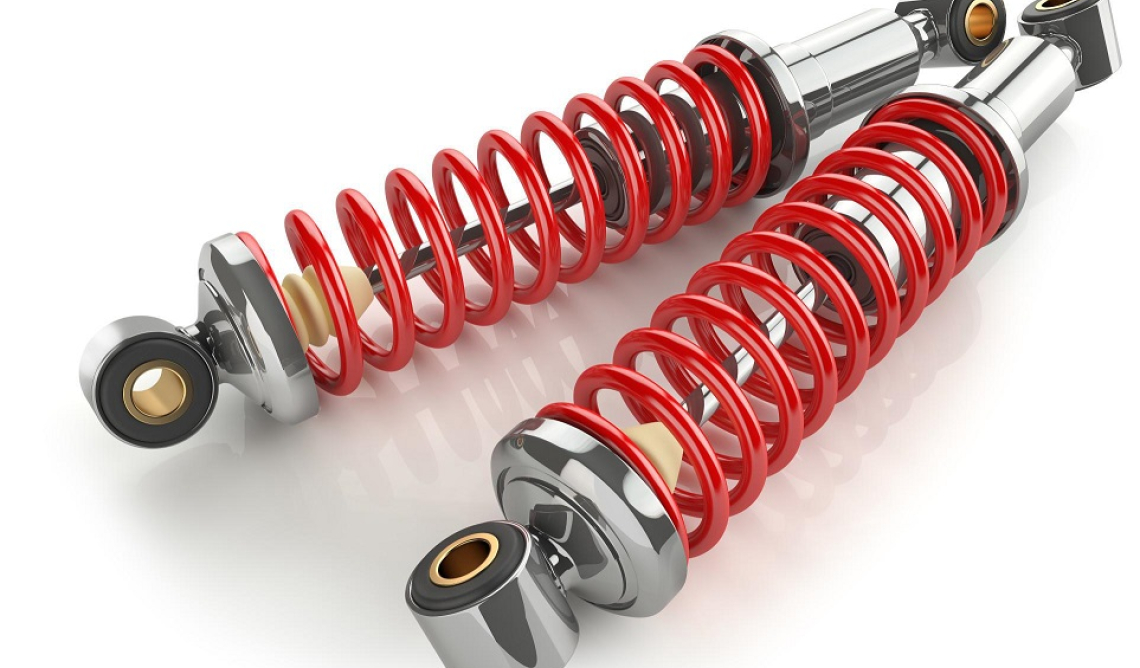
Many drivers are curious about what a shock absorber looks like. Externally, it is a cylindrical metal device resembling a telescopic tube with mounts on both ends. A typical design includes:
- a body (cylinder);
- a piston rod;
- a piston;
- seals;
- a valve system;
- working fluid (oil or a gas-oil mixture).
The shock absorber is installed between the vehicle body and the wheel suspension components, operating vertically during movement.
Structure of a Shock Absorber
The structure of a shock absorber can vary depending on its type. A classic hydraulic version usually consists of core and auxiliary elements. The core components include:
- the cylinder — the body inside which the piston moves;
- the piston and rod assembly — transmits force and moves inside the fluid;
- valves — regulate the flow of oil;
- working fluid — special shock absorber oil that protects the component from wear;
- a gas chamber (in gas-charged/gas-oil models) — reduces oil foaming.
Meanwhile, the auxiliary elements include:
- sealing collars/gaskets;
- guide bushings;
- a rod protective boot (dust cover).
How a Shock Absorber Works
To understand how a shock absorber works, one needs to visualize its operation while driving a vehicle on an uneven road. When a wheel hits an obstacle:
- Compression. The rod enters the body, the piston moves downward, oil passes through the valves, and resistance to movement is generated.
- Rebound. The wheel returns to its original position, the piston moves upward, the fluid flows back through the valve system, and vibrations are dampened.
In this way, kinetic impact energy is converted into thermal energy, which dissipates through the shock absorber body.
Operating Principle and Function Features
A car shock absorber operates on the principle of hydraulic resistance. This means that the faster the rod moves, the more resistance the valve system creates. Therefore, the main tasks performed by a shock absorber are:
- providing a smooth ride;
- stabilizing the vehicle at high speeds;
- controlling suspension oscillations;
- maintaining wheel contact with the road.
That is why even minor wear on shock absorbers can significantly affect the vehicle's behavior.
Types of Shock Absorbers
Depending on the design and operating principle, several main types are distinguished:
- Hydraulic (oil) — the simplest shock absorbers in terms of design, providing a comfortable ride and frequently used in passenger cars.
- Gas-hydraulic (gas-oil) — contain pressurized gas, making them less prone to overheating and better at handling heavy loads.
- Gas (monotube) — feature increased efficiency, provide better vehicle handling, and are ideal for dynamic driving.
- Adjustable — allow for changing stiffness, adapt to driving styles, and are used in modern premium-class vehicles.
It is quite difficult to say which of these types of shock absorbers performs better, as all of them have their own advantages as well as certain disadvantages.
Signs of Shock Absorber Malfunction
During active operation, shock absorbers gradually wear out and require replacement. This can be noticed by signs such as:
- body swaying (bouncing);
- knocking noises in the suspension;
- deterioration in handling;
- increased braking distance;
- uneven tire wear;
- the car "bottoming out" after potholes.
Therefore, if these symptoms appear in your vehicle, a chassis diagnosis must be performed immediately. This directly impacts driving safety.
Specifically, functioning shock absorbers ensure:
- vehicle stability in corners;
- braking efficiency;
- control on wet or slippery roads;
- passenger comfort.
A faulty shock absorber can lead to a loss of wheel traction with the road, which is particularly dangerous at high speeds.
Conclusion
A car shock absorber is a complex and vital element of the suspension system responsible for stability, handling, and driving safety. Understanding how a shock absorber works, its structure, and its purpose helps to better assess the vehicle's condition and detect malfunctions in a timely manner.
If you notice signs of suspension wear or a deterioration in vehicle handling, do not delay maintenance. We invite you for professional diagnostics and repair of the chassis and suspension system. After all, a timely check of your shock absorbers is a guarantee of safety, comfort, and confidence on the road.


