Fighting corrosion, how to protect the car body from rust
High-quality body repair after a road accident is the first step in the fight against corrosion
Tips, prevention and professional solutions
Corrosion very often does not start "by itself", but as a result of poor-quality or delayed repairs after an accident. Even a minor impact, chip or dent can damage the paintwork and allow moisture to reach the metal. That is why high-quality body repair after an accident is not only about the appearance of the car, but also about long-term protection against rust.
Professional body repair includes proper metal preparation, anti-corrosion protection and, if necessary, restoration of the body geometry, which directly affects the life of the car and its safety. It is in this block that it is organically advisable to place a link to the relevant service.
Corrosion is one of the most dangerous enemies of a car. It rarely appears suddenly. It usually starts with a small scratch, a chip from a stone or residues of reagents on the bottom. Without proper protection, these little things over time turn into serious metal damage and expensive repairs.
To avoid this scenario, it is important to understand how rust occurs and which protection methods really work.
- How corrosion occurs: the main stages of metal destruction
Corrosion — is a gradual process that goes through several logical stages. The earlier it is detected, the easier and cheaper it is to stop it.
Stage 1. Micro-damage to the paintwork
At this stage, rust is not yet visible, but the protective layer has already been damaged. The most common causes are small chips, scratches, exposure to sand, salt and road reagents.
Stage 2. Bare metal
After the paint is damaged, the metal begins to come into contact with moisture, oxygen, and chemicals. The first reddish spots appear.
Stage 3. Active corrosion
Rust spreads under the paint. Visually, this manifests itself in the form of swellings, cracks, and "blisters."
Stage 4. Metal perforation
The metal has rusted through. At this stage, cosmetic methods are no longer effective — a full-scale body repair is required, with the cutting out of the affected areas or replacement of elements.
- Why does a car start to rust
Even modern cars with good factory protection are not immune to corrosion. The causes are usually complex and accumulate over time.
The most common factors:
- road reagents and salts
- high humidity and condensation
- damage to the paintwork
- poor-quality painting or repair
- lack of regular maintenance
- operation in regions with a humid climate
- How to prevent corrosion: effective protection methods
Body protection works best when it combines prevention and professional solutions. Below are methods that really stop the development of rust.
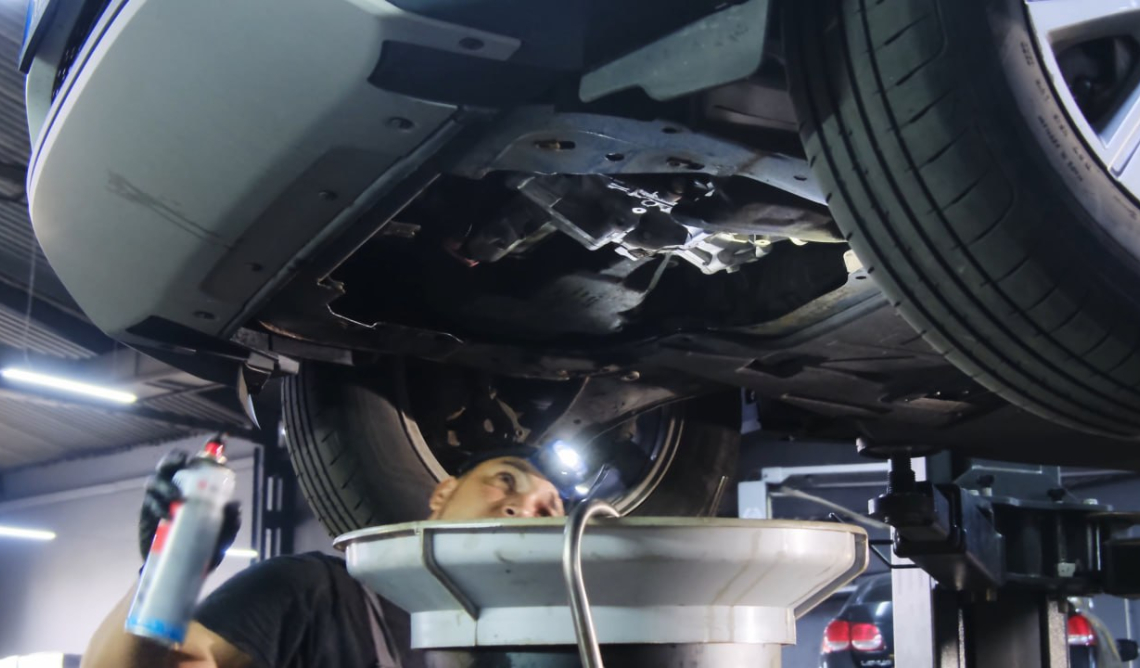
Anti-corrosion treatment of the body
This is one of the most effective ways of long-term protection. The procedure involves treating the most vulnerable areas: wheel arches, sills, underbody, hidden cavities.
Professional anti-corrosion treatment creates a protective barrier against moisture, salt and mechanical damage.
Solutions in case of corrosion:
Painting and local dent repair
If corrosion has already appeared locally, it can be eliminated without completely painting the body. Local repair of dents and damage includes:
- cleaning the metal to the live layer
- chemical neutralization of rust
- anti-corrosion primer
- painting and polishing
This allows you to stop the process and restore the protective layer.
Full body repair
When rust has penetrated deeply or damaged the load-bearing elements, radical solutions are needed:
- cutting out the affected areas
- replacing the metal
- restoring the geometry of the body
- complete painting of the elements or body
- Corrosion prevention: basic rules care
Regular care significantly extends the life of the body and reduces the need for expensive repairs.
Recommended:
- wash the car more often in winter to wash off reagents
- regularly inspect the sills, arches and underbody
- avoid long-term storage in damp garages
- do not ignore even small chips
- carry out anti-corrosion treatment every 2-3 years
- When to contact the service
There are situations when home or cosmetic methods are no longer effective. Professional help is needed if:
- touching up does not give results
- rust reappears
- there are cracks or swellings near the thresholds and arches
- the bottom of the car begins to actively "bloom"
In such cases, it is advisable to perform anti-corrosion treatment of the body, painting and body protection.