
Classification of current electric vehicles: EV, BEV, HEV, FHEV, EREV, FCEV
The electrification of transport is rapidly reshaping the automotive market. Today, various acronyms like EV, BEV, HEV, FHEV, EREV, and FCEV, which represent different types of electrified vehicles, are heard more and more frequently.
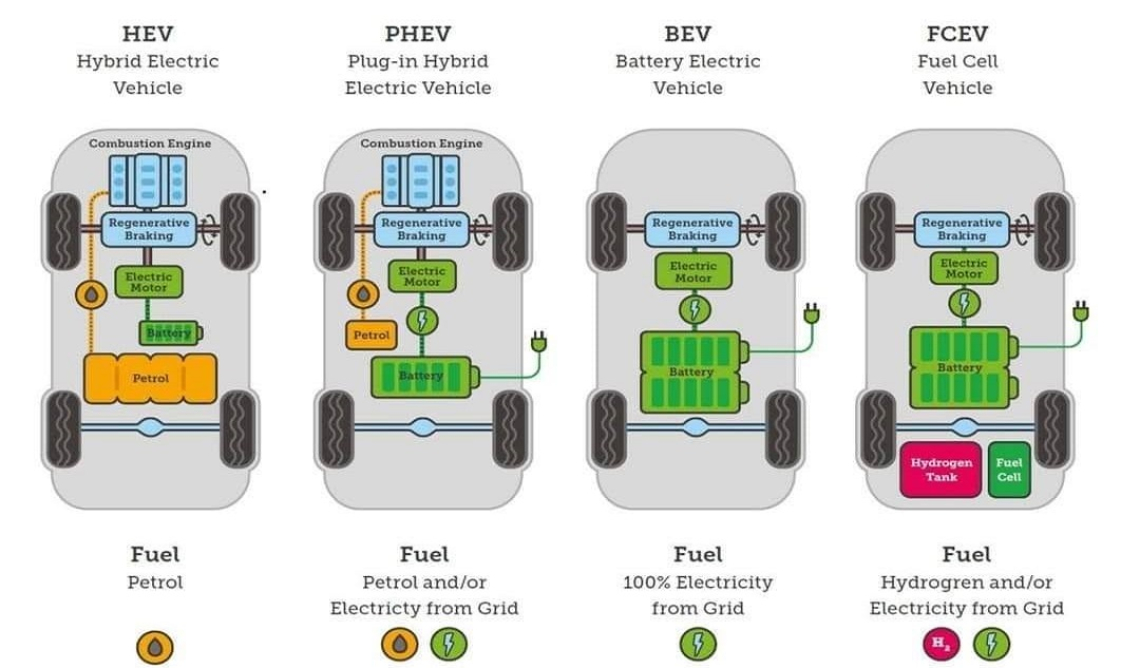
Understanding these terms is essential not only for drivers but also for auto service specialists, as each system has its own structure, operating principle, and maintenance requirements.
What Is an EV (Electric Vehicle)
EV (Electric Vehicle) is an umbrella term that denotes any vehicle that utilizes an electric motor.
EVs can include:
- all-electric cars;
- hybrid models;
- vehicles with alternative sources of electricity.
The electric motor in such cars is powered by a battery or a generator, and the main advantage is reduced emissions and high energy efficiency.
BEV
BEV (Battery Electric Vehicle) refers to all-electric vehicles that do not have an internal combustion engine. The main features of a BEV include:
- operating solely on battery power;
- charging from the power grid or charging stations;
- having zero exhaust emissions.
Among their advantages are zero emissions, low maintenance costs, and exceptionally quiet operation. On the other hand, they have quite few disadvantages. These include dependence on charging infrastructure, long charging times, and limited driving range.
HEV
HEV (Hybrid Electric Vehicle) refers to hybrid cars that combine a gasoline engine and an electric motor. How an HEV works:
- the electric motor assists the ICE;
- the battery charges while driving;
- no external charging is required.
This type of electric vehicle also has its advantages:
- fuel economy;
- ease of use;
- no need for charging stations.
However, they also have certain disadvantages. Specifically, these are a significantly shorter electric-only driving range (compared to BEVs) and a more complex design.
FHEV
FHEV (Full Hybrid Electric Vehicle) is essentially a slightly expanded version of the HEV that emphasizes the full-fledged operation of the hybrid system. Its features include:
- the vehicle can move on electric power alone for short distances;
- the internal combustion engine and the electric motor work as a unified system;
- battery charging occurs automatically.
In other words, the main difference is that an FHEV is a more "advanced" HEV, but still without the ability to plug into an outlet.
EREV
EREV (Extended Range Electric Vehicle) refers to electric vehicles where the primary movement is provided by an electric motor, while the ICE serves as a generator. Thus, the core operating principle looks like this: the car runs on electricity, and when the battery drains, a gasoline generator kicks in. In this setup, the ICE does not drive the wheels directly.
Advantages of an EREV vehicle:
- extended driving range;
- no "range anxiety";
- the comfort of an electric vehicle with an ICE backup.
At the same time, such cars come with a rather high cost and a very complex structure.
FCEV
FCEV (Fuel Cell Electric Vehicle) refers to vehicles that obtain electricity from hydrogen fuel cells. How it works:
- Hydrogen reacts with oxygen inside the fuel cell.
- Electricity is generated.
- Following the reaction, only one byproduct remains — water.
An FCEV has its own quite significant advantages:
- fast refueling (a few minutes);
- extended driving range;
- zero harmful emissions.
But there are also disadvantages:
- very limited infrastructure;
- high cost;
- complexity of the technology.
However, it is worth remembering that FCEVs are newer models that have only recently appeared on the market. Therefore, in a few years, these disadvantages may be completely eliminated, which will significantly increase the demand for this type of vehicle.
Classification of Electric Vehicles: A Quick Comparison
|
Vehicle Type |
Decoding |
Energy Source |
Plug-in Charging |
Main Advantages |
Main Disadvantages |
|
EV |
Electric Vehicle |
Electricity (general category of electric transport) |
Depends on the type |
General name for all electrified cars |
Not a standalone vehicle type |
|
BEV |
Battery Electric Vehicle |
Rechargeable battery |
Yes |
Zero emissions, low maintenance costs, quiet operation |
Dependence on charging infrastructure, charging time |
|
HEV |
Hybrid Electric Vehicle |
Gasoline (or diesel) engine + electric motor |
No |
Fuel economy, automatic battery charging, ease of operation |
Inability to drive for long periods on electric power alone |
|
FHEV |
Full Hybrid Electric Vehicle |
ICE + electric motor |
No |
Can move on electric power for a short time, lower fuel consumption |
More complex design compared to a conventional vehicle |
|
EREV |
Extended Range Electric Vehicle |
Battery + gasoline generator |
Yes |
Extended driving range, primary movement is provided by the electric motor |
Higher cost and design complexity |
|
FCEV |
Fuel Cell Electric Vehicle |
Hydrogen fuel cells |
No (refuels with hydrogen) |
Fast refueling, extended driving range, zero harmful emissions |
Very few hydrogen refueling stations, high vehicle price |
Why It Is Important to Understand Electric Vehicle Types
Understanding the classification of electric vehicles helps to:
- properly choose a vehicle based on needs;
- evaluate maintenance costs;
- understand the specifics of repairing electrical systems;
- avoid mistakes during diagnostics.
If you experience problems with your vehicle's electronics, power systems, charging, or hybrid powertrains — turn to the professionals.
Our auto electricians perform:
- electrical system diagnostics;
- repair of hybrid and electric vehicles;
- inspections of batteries and high-voltage systems;
- troubleshooting of electronics.
We invite you for professional auto electrical diagnostics and repair — fast, accurate, and with a quality guarantee.


