Gearbox: how to decipher it, why a gearbox is needed and what types it is
The gearbox is one of the most important components of the car, and it itself ensures the effective transmission of torque from the engine to the wheels. Without this mechanism, the car would not be able to roll smoothly, become angry, climb up, or collapse at high speed.
Many novice drivers wonder what gearbox (transmission) stands for and what functions it performs. It is worth remembering that in technical literature, terms like "gearbox," "transmission," or "transmission box" are widely used. Regardless of the exact name, it refers to one of the key elements of a vehicle's drivetrain.
Why a Gearbox Is Needed
An internal combustion engine operates most efficiently only within a certain RPM range. If its rotation were transmitted directly to the wheels, the vehicle wouldn't be able to start moving smoothly or maintain various speed modes. That is why a gearbox is installed between the engine and the wheels. The main functions of a gearbox include:
- changing the gear ratio depending on road conditions;
- transmitting torque to the drive wheels;
- ensuring reverse movement;
- briefly disconnecting the engine from the drivetrain during gear shifts;
- maintaining optimal engine RPMs for fuel economy.
Thanks to this, the vehicle starts moving, climbs hills, drives in traffic jams, and develops high speeds on the highway with equal confidence.
Operating Principle of a Gearbox
To better understand the operating principle of a gearbox, it is enough to recall a multi-speed bicycle. By shifting between sprockets, the cyclist changes the ratio between the pedaling force and the riding speed. A similar principle is used in a car, only gears of various sizes work instead of sprockets. They create different gear ratios that allow for obtaining the required torque or speed. At the same time, in lower gears, the engine operates with greater pulling power, which is necessary when starting or driving uphill. Higher gears reduce engine speed, lowering fuel consumption and noise levels.
Core Elements of a Gearbox
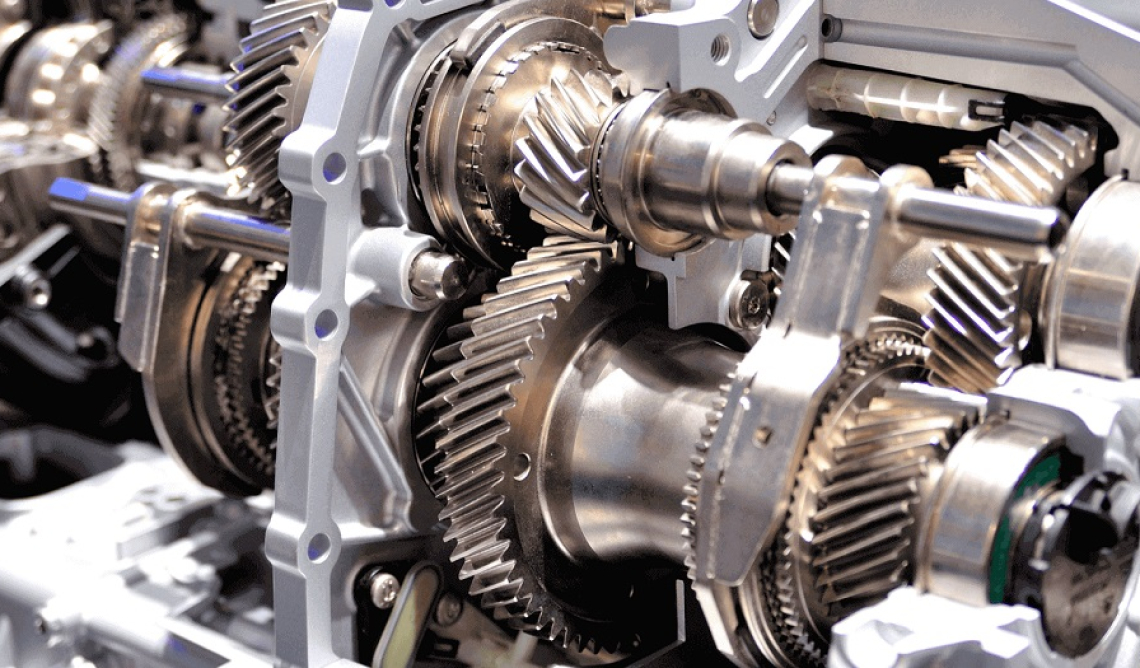
Regardless of the design, most gearboxes consist of the following parts:
- input and output shafts;
- a set of gears;
- synchronizers;
- a gear shift mechanism;
- bearings;
- a housing (casing);
- a lubrication system.
Automatic gearboxes also utilize electronic control units, a torque converter, or a mechatronic unit, depending on the specific design.
What Types of Gearboxes Exist
The automotive industry utilizes several main types of transmissions. Each of them has its own features, advantages, and disadvantages.
Manual Transmission (MT)
The manual gearbox remains the simplest and most reliable design. Gears are shifted by the driver using a gear lever and a clutch pedal. Its main advantages are:
- simple design;
- low repair costs;
- high reliability;
- efficient fuel consumption;
- maximum control over the vehicle.
However, it also has its disadvantages:
- requires driving skills;
- less comfortable in city traffic jams;
- the driver must constantly work with the clutch.
Automatic Transmission (AT)
An automatic transmission independently selects the gear depending on the driving speed and engine load. Therefore, its primary advantages include:
- comfortable driving;
- smooth gear shifting;
- less stress on the driver;
- convenience in city traffic.
Disadvantages include a more complex design, more expensive maintenance, and stricter requirements regarding transmission fluid quality.
Automated Manual Transmission / Dual-Clutch Transmission (AMT/DCT)
A robotic (automated manual) gearbox combines a manual gearbox setup with automatic control. Gear shifts are performed by electronics and actuators. Its main features include:
- fuel efficiency;
- fast shifting;
- lower fuel consumption compared to a classic automatic.
However, jerks during shifting are possible when using it. Additionally, complex repairs of the mechatronic unit or the clutch actuator also count among the disadvantages of robotic gearboxes.
Continuously Variable Transmission (CVT)
A continuously variable transmission does not have conventional gears. The gear ratio changes smoothly using pulleys and a belt or a chain. This ensures maximum acceleration smoothness, comfort, and economical engine operation. A CVT also has certain disadvantages:
- high maintenance requirements;
- sensitivity to overheating;
- expensive repairs in case of significant wear.
Comparison of Main Gearbox Types
|
Characteristic |
Manual (MT) |
Automatic (AT) |
Robotic (AMT/DCT) |
CVT |
|
Operating principle |
Driver shifts gears manually using a clutch |
Gears shift automatically |
Manual gearbox with electronic control |
Stepless gear ratio adjustment |
|
Driving comfort |
Low |
High |
Medium |
High |
|
Efficiency |
High |
Medium |
High |
High |
|
Acceleration dynamics |
High |
High |
Very high |
Smooth acceleration without shifts |
|
Reliability |
Very high |
High under the condition of timely maintenance |
Medium |
Medium |
|
Maintenance cost |
Low |
Above average |
High |
High |
|
Repair cost |
Low |
High |
High |
High |
|
Convenience in city traffic |
Medium |
Excellent |
Excellent |
Excellent |
|
Optimal usage |
Any conditions, active driving |
City, highways, comfortable trips |
Modern passenger cars |
Calm driving style and city operation |
|
Main disadvantages |
Need to work with the clutch pedal |
More expensive maintenance and repair |
Possible jerks during shifting, complex electronics |
Sensitivity to overheating and fluid quality |
Signs of Gearbox Malfunction
Any transmission requires timely maintenance. Ignoring the first "warning bells" often leads to expensive repairs. Gearbox malfunctions can be indicated by:
- unusual noise;
- difficult gear engagement;
- jerking during movement;
- gear slipping;
- transmission fluid leaks;
- unusual vibrations;
- error messages on the instrument cluster.
If at least one of these symptoms appears, it is advisable to carry out professional diagnostics as soon as possible and promptly resolve all potential issues.
How to Extend the Gearbox Lifespan
The service life of a gearbox largely depends on driving style and the quality of technical maintenance. General manufacturer recommendations for increasing lifespan include:
- regularly change the transmission fluid according to the manufacturer's recommendations;
- avoid abrupt starts unless necessary;
- do not overload the vehicle;
- timely eliminate even minor fluid leaks;
- do not ignore unusual noises or jerks;
- undergo computer diagnostics at the first sign of malfunctions.
Conclusion
Now you know what a gearbox stands for and why this assembly is one of the most vital in a vehicle's design. The gearbox is a complex mechanism that ensures optimal power transmission from the engine to the wheels, affecting dynamics, fuel consumption, and driving comfort. Regardless of whether a manual, automatic, robotic transmission, or a CVT is installed on the vehicle, timely maintenance will help significantly extend its lifespan.
If you notice unusual noises, difficult gear shifting, jerks, or other signs of malfunction, do not delay your visit to the service shop. Our specialists will perform professional engine and transmission diagnostics, determine the cause of the malfunction, and help restore the reliable operation of your vehicle.