
A manifold absolute pressure sensor: purpose, operating principle and signs of malfunction
Typically, a vehicle is equipped with a large number of electronic components that ensure stable and economic engine operation. One of the most important elements of the management system is the manifold absolute pressure sensor, which is also commonly referred to as the MAP sensor.
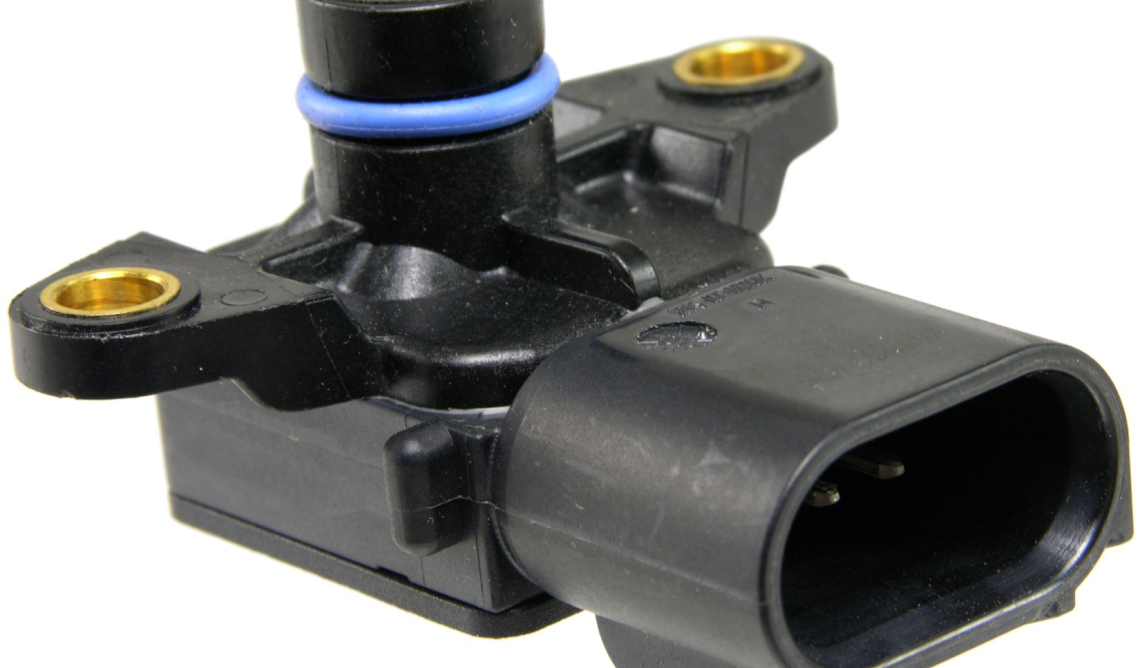
It transfers information to the electronic control unit about the amount of air entering the engine, helping to form the optimal ratio of the air-fuel mixture. The correct operation of this sensor directly affects fuel consumption, vehicle dynamics, exhaust gas toxicity levels, and the lifespan of the powertrain.
What Is a Manifold Absolute Pressure Sensor
A manifold absolute pressure (MAP) sensor is an electronic device that measures the air pressure in the intake manifold and transmits the retrieved data to the engine control unit (ECU). Based on the received information, the system can determine:
- engine load;
- the amount of air entering the cylinders;
- the required volume of fuel for injection;
- the optimal ignition timing angle.
In many cars, the MAP sensor is used as the primary sensor for calculating engine operating parameters, or it works in conjunction with a mass air flow (MAF) sensor.
Design of the MAP Sensor
Despite its compact size, the sensor has a fairly complex internal structure. Its main elements are:
- a plastic housing;
- a vacuum fitting for connection to the intake manifold;
- an electrical connector;
- a sensitive diaphragm;
- strain gauges or semiconductor elements;
- an electronic signal processing circuit.
In most newer vehicle modifications, digital sensors are installed, which immediately transmit a ready-to-use digital signal to the ECU. Such devices are characterized by high accuracy and speed of operation.
Operating Principle of the Manifold Absolute Pressure Sensor
The sensor's operation is based on changing the position of a special diaphragm under the influence of air pressure. This process typically occurs as follows:
- Air in the intake manifold creates a certain pressure.
- The diaphragm inside the sensor deforms under its influence.
- The electrical resistance of the strain gauges changes.
- The electronic circuit converts the received data into a voltage signal ranging from 0.5 to 4.5 V.
- The signal is transmitted to the engine control unit.
- The ECU analyzes the metrics and adjusts the fuel delivery.
The greater the load on the engine, the higher the pressure in the intake manifold and the higher the voltage of the sensor signal.
What Is the Purpose of the MAP Sensor
A malfunction of this sensor can seriously affect the vehicle's performance. This is because the manifold absolute pressure sensor participates in several important processes at once. Specifically, these include:
- monitoring the composition of the air-fuel mixture;
- determining the engine load;
- adjusting the operation of the ignition system;
- reducing fuel consumption;
- lowering harmful emissions;
- ensuring stable idle speeds;
- supporting the efficient operation of the turbocharger in turbocharged engines.
Thanks to the accurate metrics of the sensor, the engine runs more smoothly and economically, even under varying weather conditions.
Manifold Absolute Pressure Sensor Malfunctions: Causes and Symptoms
Although the MAP sensor is considered a fairly reliable element, it can also fail over time. The most common causes of breakdown are:
- contamination of the sensing element;
- damage to the vacuum hose;
- depressurization of the intake system;
- corrosion of the contacts;
- broken wiring;
- oxidation of the connector;
- mechanical damage to the housing;
- malfunction of the air temperature sensor;
- factory defect.
In some cases, the problem arises not because of the sensor itself, but due to a loss of sealing in the intake system.
How to Tell if the Manifold Absolute Pressure Sensor Has Failed
When the MAP sensor begins to transmit incorrect data, engine performance deteriorates noticeably. At the same time, the following signs of malfunction appear:
- increased fuel consumption;
- unstable idle speed;
- difficult engine starting;
- hesitation or flat spots during acceleration;
- reduced power;
- jerking of the vehicle while driving;
- engine knocking;
- black or white smoke from the exhaust pipe;
- the smell of gasoline near the throttle valve;
- the appearance of the Check Engine light.
Additionally, the electronic control unit may generate error codes related to the incorrect operation of the pressure sensor.
What Happens if You Disconnect the MAP Sensor
Some drivers believe that a faulty sensor can simply be unplugged to continue operating the vehicle. In reality, such a decision can lead to even greater problems. After disconnecting the sensor, the following consequences are possible:
- a substantial increase in fuel consumption;
- loss of engine power;
- worsened acceleration dynamics;
- unstable operation at idle;
- increased load on the catalytic converter;
- increased exhaust toxicity.
Furthermore, the engine switches to a limp-home (emergency) mode, using default average parameters instead of real-time metrics.
How to Test a Manifold Absolute Pressure Sensor
The inspection begins with a visual check. First of all, it is necessary to check:
- the condition of the housing;
- the tightness of the vacuum hose;
- the cleanliness of the fitting;
- the absence of corrosion on the contacts;
- the integrity of the wiring.
For more accurate diagnostics, a multimeter or a diagnostic scanner is used.
During a multimeter test, the following are monitored:
- supply voltage;
- signal voltage;
- contact resistance;
- the presence of breaks in the wiring.
On a properly functioning sensor, the signal voltage typically varies between 0.5 and 4.5 V depending on the engine's operating mode.
Cleaning and Replacing the MAP Sensor
In many cases, the cause of incorrect operation is contamination of the sensitive element. Therefore, cleaning is recommended before replacement. For this purpose, you can use:
- a specialized sensor cleaner;
- carburetor cleaner;
- electronic component cleaning agents.
After removal, it is necessary to carefully clean the internal part of the sensor and the contacts without touching the diaphragm.
If the symptoms do not disappear after cleaning, the manifold absolute pressure sensor must be replaced with a new one. You can do this yourself, but it is still better to leave this job to professionals. After all, only we employ certified technicians with extensive experience who will quickly and properly replace a worn-out MAP sensor. Our specialists can also perform full diagnostics and repair of your vehicle's engine to ensure its "heart" always runs without hitches or failures.


